Choosing the Right Wide Plank Flooring: Comparing Width, Length, and Grade
Februar 20, 2026
How dimensions and wood grain transform a space—from modern calm to rustic character
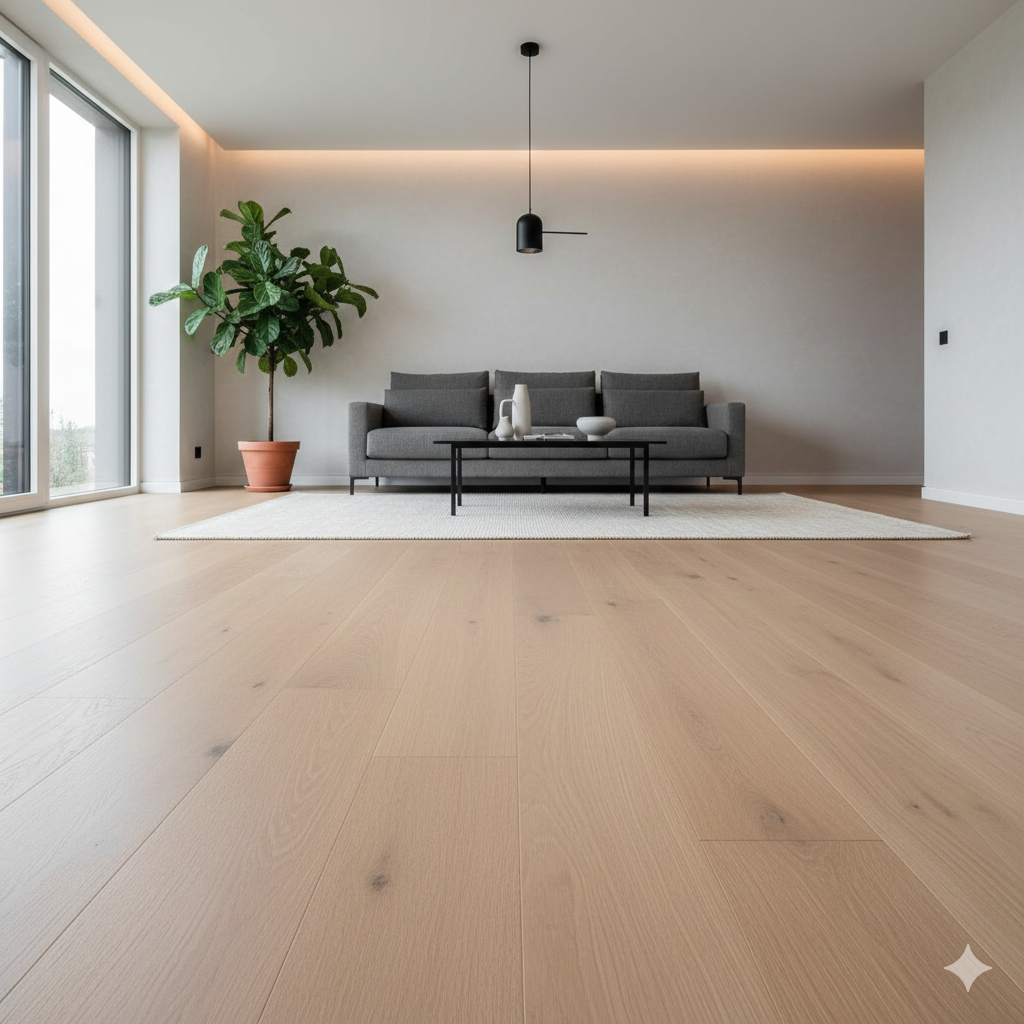
Wide plank flooring (Landhausdielen) is among the most popular parquet formats for good reason: it feels high-end, timeless, and instantly makes a room look "finished." However, many homeowners underestimate how much the width, length, and grading (sorting) of the planks—rather than just the wood species or color—define the final result.
While we have a separate guide on construction and technical quality, this article focuses on what you actually see: proportions and wood grain, and how they dictate your interior style.
1. Plank Width: Narrow (14 cm) vs. Wide (22 cm)
Width is the fastest way to alter a room's visual energy. Think of it this way: the wider the plank, the fewer the joints—and the "calmer" the surface.
- Narrow Planks (approx. 14 cm): Structured & Classic
Narrower planks create more repetition. This makes the floor feel more finely detailed and traditional. They are ideal for smaller rooms where a massive format might feel overwhelming.
Effect: More lines per square meter = more structure and coziness.
- Wide Planks (approx. 22 cm): Calm & Architectural
Wide planks remain a top trend for 2026. They make spaces feel larger and allow the natural grain of the wood to take center stage.
Effect: Fewer joints = more tranquility = a high-end, modern look. Perfect for minimalist interiors.
.png)
2. Plank Length: Short (1.20 m) vs. Long (2.40 m)
Length doesn't just influence style; it affects the perceived size of the room.
- Short Planks (approx. 1.20 m): Dynamic & Lively
Shorter lengths create more "butt joints" (where the ends meet), resulting in a more animated floor pattern. This can feel very vibrant and lived-in.
- Long Planks (up to 2.40 m): Spacious & Elegant
Long planks represent luxury and continuity. By reducing visual interruptions, they stretch the room and create a "loft-like" atmosphere.
Pro Tip on Direction: Laying planks lengthwise stretches the room, while laying them crosswise can make a narrow room feel wider.
3. Grading: Modern-Clean or Rustic-Natural?
The "grading" (or sorting) defines the visual pattern of the wood—and thus its entire character. Even with the exact same oak species and surface finish, a floor can look completely different depending on whether the selection is clean or rustic.
A) Calm Grading (Virtually Knot-Free): Modern, Clean, Elegant
- Key Features: Very few to no knots, a uniform grain, and minimal color variation.
- Impact on the Room: Calm gradings feel modern and high-end, often appearing almost "furniture-like" in their precision. They are the perfect choice for minimalist concepts featuring clean baseboards, neutral wall colors, and reduced architectural details.
B) Natural Grading (With Knots): Lively, Authentic, Welcoming
- Key Features: Visible but non-dominant knots, subtle color play, and a naturally balanced appearance.
- Impact on the Room: For many, this grading is the perfect "middle ground." It feels authentic and warm without becoming overly rustic. It is ideal if you want a modern interior that still retains a strong sense of nature and coziness.
C) Rustic Country Grading: Bold, Classic, Character-Rich
- Key Features: Distinct and sometimes large knots, significant color variation, and often featuring black-filled cracks or striking textures.
- Impact on the Room: Rustic floors feel more traditional and "grounded." They pair exceptionally well with Country, Industrial, or Chalet styles—but can also serve as a powerful, organic contrast in ultra-modern spaces.
Important Note: Rustic gradings become very prominent on large surfaces. If you want to keep the overall look balanced, it is best to combine rustic floors with understated walls and minimalist furniture.
4. Matching Dimensions & Grading to Your Style

To help you find the perfect match, here are four proven combinations for 2026:
- Modern & Quiet (Top Trend 2026)
Combination: Wide (22 cm) + Long (2.40 m) + Clean Grade.
Result: An expansive, architectural surface that looks seamless and sophisticated.
- Modern but Cozy
Combination: Mid-to-Wide (18–22 cm) + Long + Natural Grade.
Result: High-end quality with enough "wood character" to feel inviting rather than sterile.
- Classic & Homey
Combination: Narrow (14–16 cm) + Short-to-Mid length + Natural/Rustic Grade.
Result: A structured, lively floor that pairs beautifully with traditional furniture.
- Bold & Rustic
Combination: Wide planks + Any length + Country Grade.
Result: A floor with maximum presence. It feels "grounded" and pairs well with natural materials like stone or leather.
5. Frequently Asked Questions
- Are wide planks always better? Not necessarily. Wide planks are calmer; narrow planks are more structured. Choose based on the "vibe" you want.
- What is the most "modern" choice? Currently, wide, long planks in a "Clean" (knot-free) grade are considered the pinnacle of modern interior design.
- Can rustic floors work in a modern house? Absolutely. A rustic floor can act as a stunning organic contrast to smooth, white walls and minimalist furniture.
Summary
The right wide plank flooring is a harmony of proportion and wood grain. By deciding on the "room energy" you want—calm and architectural or lively and cozy—you can choose the dimensions and grading that fit your vision perfectly.