Parquet Guide: From Choosing the Right Parquet to Optimal Installation
Januar 26, 2026
Choosing parquet flooring is not just about appearance - it also determines everyday usability, maintenance requirements, and long-term durability. In this guide, we explain the key differences between parquet types, formats, and installation patterns, and show why the subfloor and installation method ultimately have the greatest impact on achieving a truly high-quality result.
Parquet Type & Quality: Solid Wood vs. Engineered Parquet
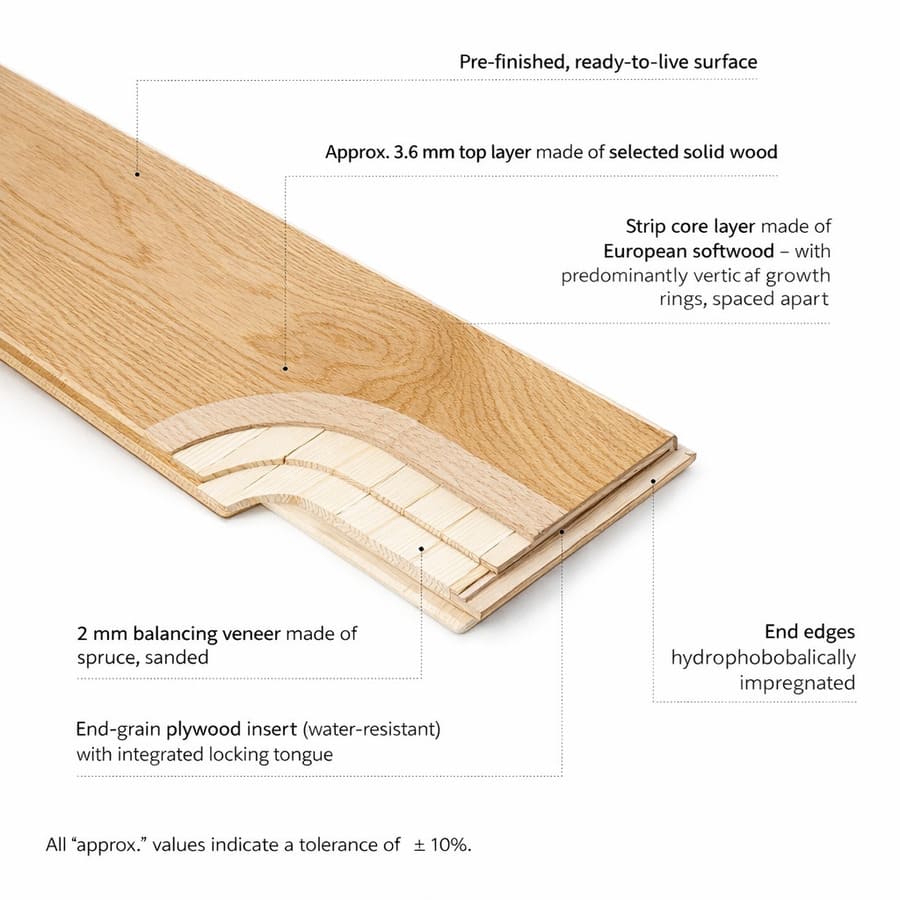
One of the biggest factors influencing price and quality is the choice between solid wood parquet and engineered parquet.
Solid wood parquet is used far less frequently today, mainly due to the growing focus on sustainability, cost efficiency, and everyday practicality. It is also more complex to install and more sensitive in daily use: even minor changes in temperature or humidity can cause the wood to warp, cup, or develop gaps.
High-quality engineered parquet, on the other hand, is often the better choice. Reputable European manufacturers have continuously refined these floors over many years, resulting in modern engineered parquet that is highly dimensionally stable and resistant to warping. It is usually more affordable, easier to handle, and offers a wide selection of grades, surface finishes, and plank formats.
In terms of durability, engineered parquet is not far behind solid wood: when professionally installed and properly maintained, high-quality engineered flooring can last 30 years or more and depending on the thickness of the wear layer can be sanded and re-oiled or resealed multiple times.
The thicker the wear layer (solid wood top layer) of engineered parquet, the more often the floor can be refinished, directly increasing its long-term value.
Parquet Formats & Installation Patterns: Plank, Strip Parquet, or Herringbone?
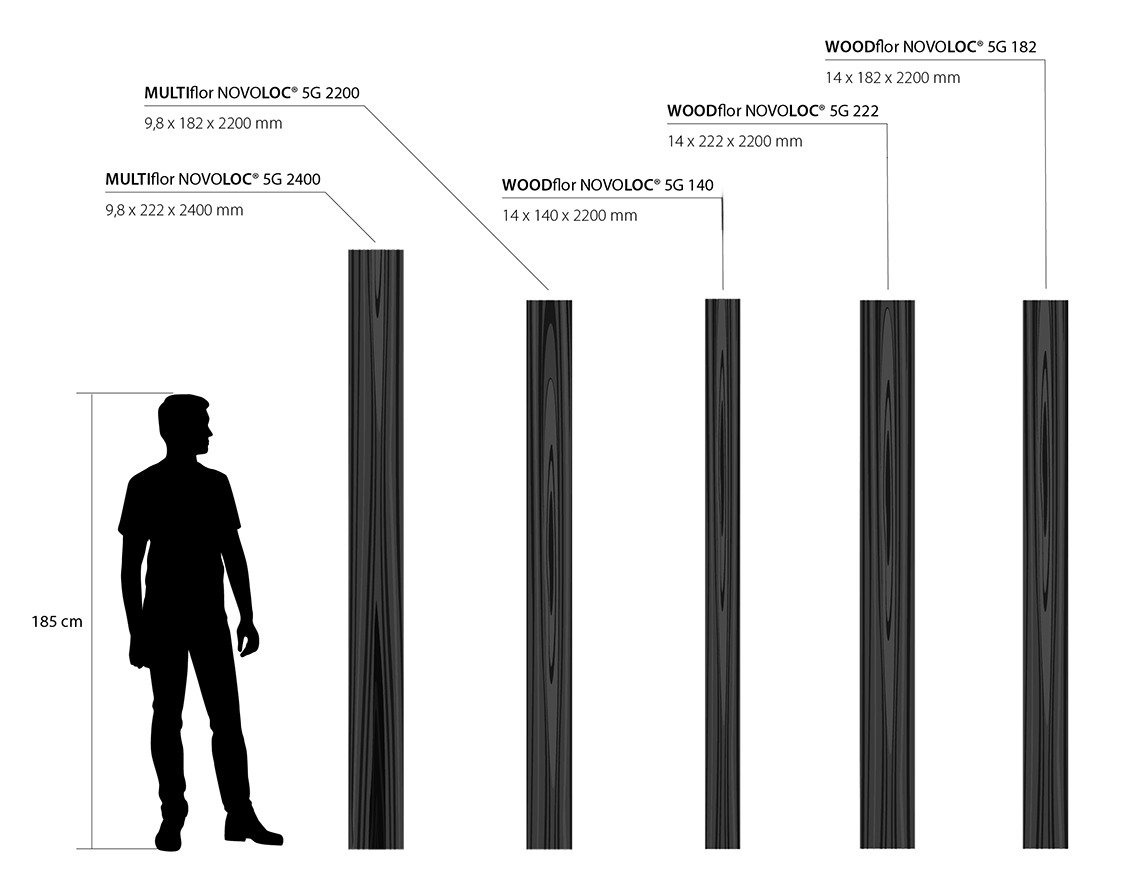
The cost of parquet installation depends largely on the chosen format and installation pattern. Both affect planning, cutting, and execution effort - and therefore the final price.
Wide Plank (Plank Flooring)
Wide plank flooring is the classic parquet format, typically selected in lengths of approx. 2.0-2.2 m and widths of 13-22 cm. Due to the large planks, it is usually installed in a straight or random pattern, creating the familiar calm and elegant plank look.
Strip Parquet (Narrow Formats)
Strip parquet consists of much smaller elements, for example approx. 11 mm thickness, 70 mm width, and 500 mm length. Although it is also engineered parquet, the smaller format creates a more dynamic and structured appearance compared to wide planks.
A major advantage of strip parquet is the wide range of installation patterns it allows, such as:
- Straight pattern
- Cube pattern
- Ladder pattern
- Herringbone
Herringbone & French Herringbone
Patterns such as classic herringbone and French herringbone are particularly striking but also more complex. In French herringbone, the elements are pre-cut at the factory, typically at 45° or 60°, creating a refined and elegant appearance.
What Does This Mean for Costs?
As a general rule: the more complex the installation pattern, the higher the labor cost. Herringbone and French herringbone installations are usually more expensive due to increased planning, cutting precision, and installation time.
Room layout also affects pricing: many corners, niches, short wall sections, or irregular floor plans increase effort and cost—regardless of whether wide planks or strip parquet are installed.
The best format and pattern ultimately depend on interior style, room size, natural light, and budget. We are happy to advise on the parquet type and installation method that best suit your project both visually and technically.
Smaller rooms often benefit from narrower formats, while large open spaces usually look best with wider planks or calmer patterns, as they create a more balanced and orderly appearance.
Subfloor & Preparation: The Most Underestimated Cost Factor
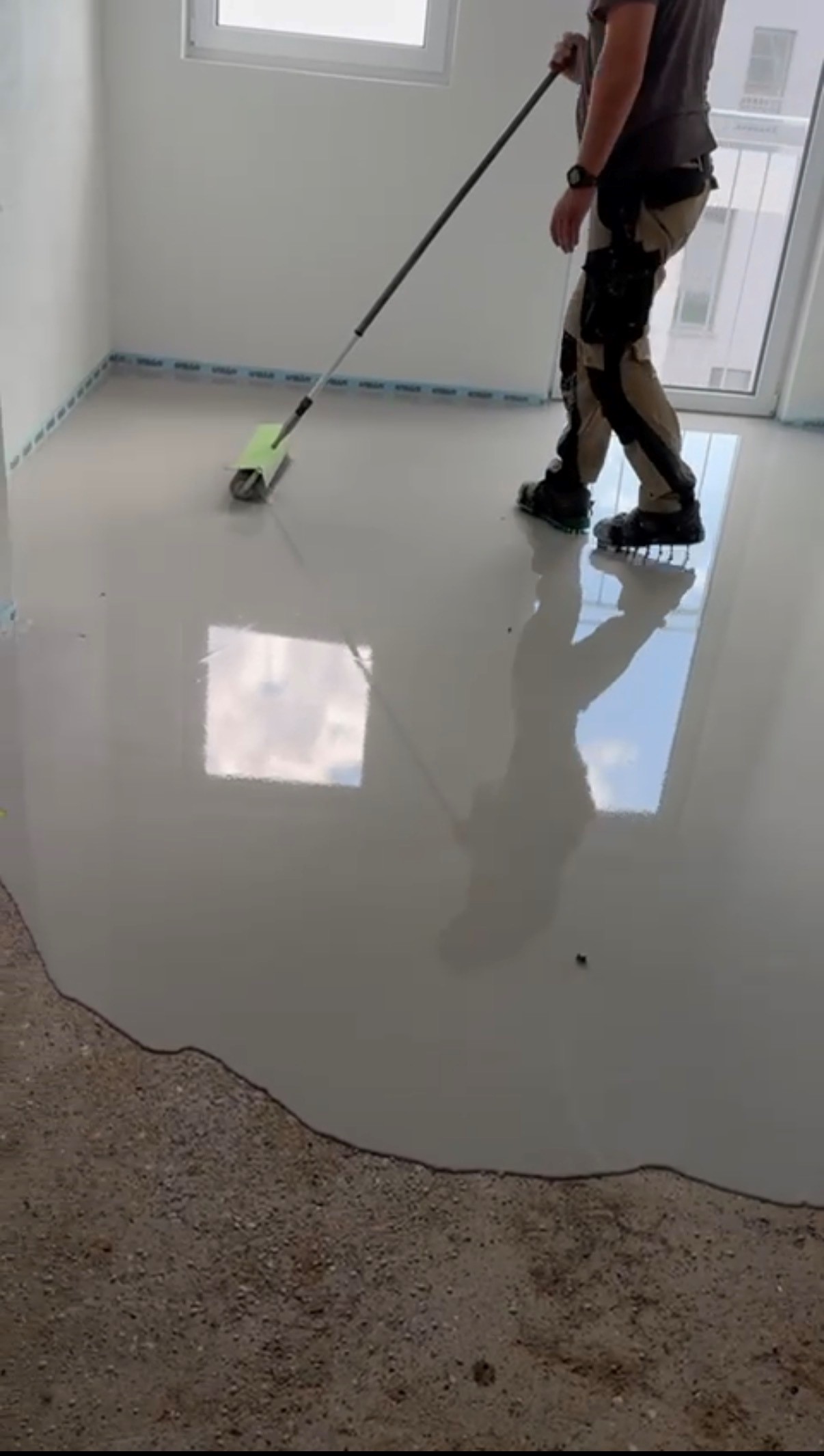
One aspect often underestimated during planning is the subfloor. Yet it forms the foundation for everything—and is one of the most critical factors for a long-lasting, beautiful parquet floor.
Key requirements:
- The subfloor must be dry
- It must be load-bearing and crack-free
- Above all, it must be level (no slopes, rises, or unevenness)
Depending on the parquet type and installation method, this becomes even more important. Especially with herringbone patterns - classic or French - excellent flatness is essential to avoid visible gaps, edges, or irregularities.
Typical subfloor preparation work includes:
- Leveling / smoothing
- Priming
- Moisture testing (e.g. CM measurement)
- Repairing cracks and joints
Subfloor preparation is the most common reason why installation quotes vary significantly, as some contractors underestimate or omit this work.
Additional Services: Skirting Boards, Transitions & Details
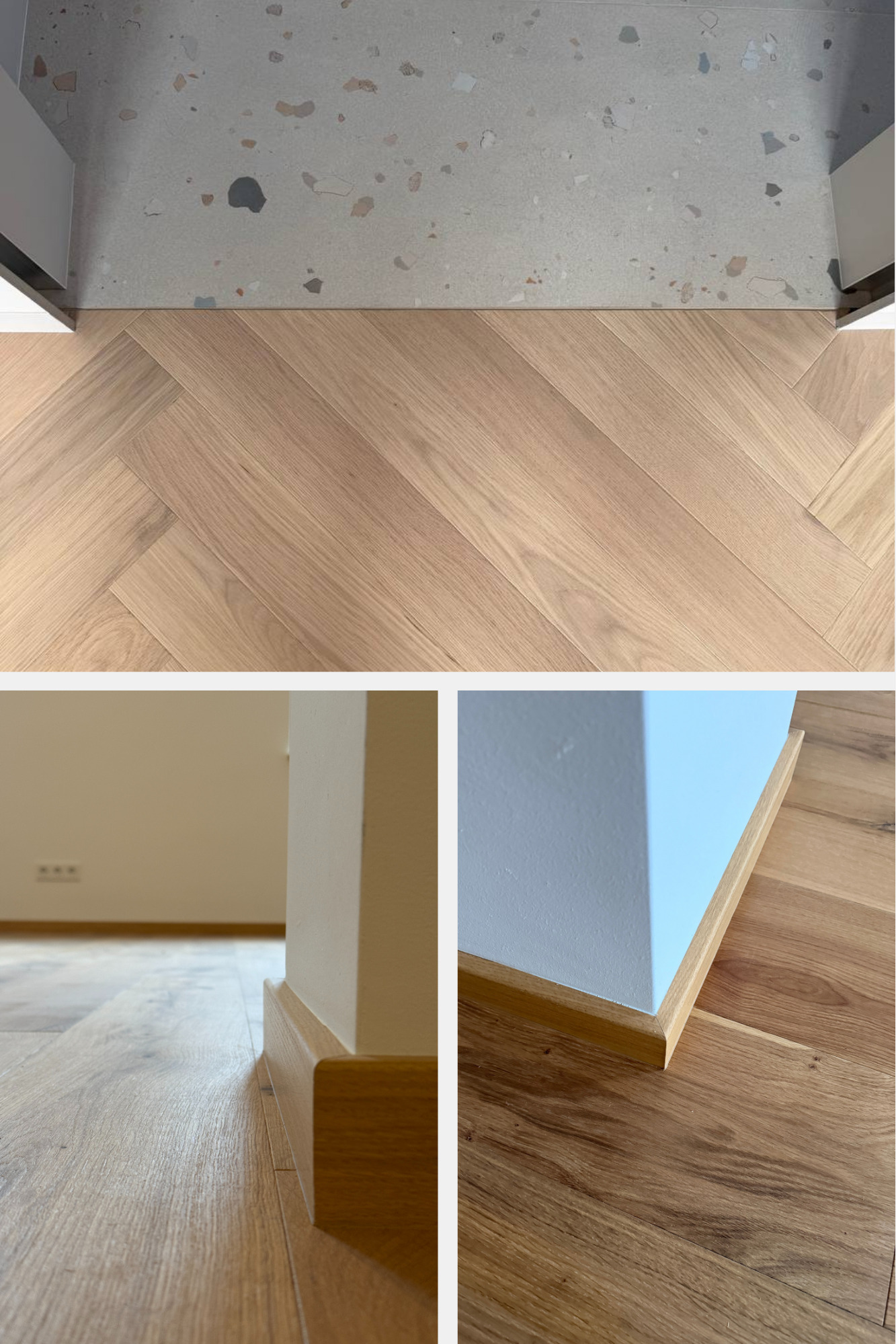
Many people focus only on material and installation costs, but true quality is often defined by the details. Skirting board installation, in particular, is frequently underestimated, despite its major influence on the final result.
There are many skirting options (shape, height, finish), but installation quality is crucial. While some installers simply nail skirting boards, professionals achieve much cleaner results. For a flawless finish, skirting boards are typically glued, precisely mitered, and professionally sealed to the wall - and, depending on design, also to the floor. This creates a calmer, more cohesive, and higher-quality overall appearance.
Other common additional services include:
- Transition profiles (where necessary)
- Adjustments around door frames and sliding door systems
- Removal and disposal of old flooring
- Transition strips are not inherently bad - but they are often avoidable if floor heights, expansion joints, and transitions are properly planned from the outset.
Installation Methods Compared: Floating or Fully Glued?
.jpg)
The installation method affects price, comfort, and performance.
- Floating Installation
- Often slightly more affordable
- Common with click systems
- Suitable for renovations if the subfloor is adequate
Disadvantages: Can sound hollow and may not be ideal for heavy loads or underfloor heating.
Fully Glued Installation
More complex, but technically the highest-quality solution
- Improved stability and impact sound insulation
- Highly recommended for:
- Underfloor heating
- Large areas
- Premium formats (e.g. herringbone)
- Maximum durability
Glued parquet typically feels more solid underfoot, with less vibration and a quieter room atmosphere.
Parquet & Underfloor Heating: What Really Matters
Underfloor heating is now standard - and parquet works very well with it when the right materials and installation method are chosen.
Parquet Thickness & Heat Transfer
In general, thinner constructions allow heat to pass through more quickly. In practice, however, the overall system (subfloor, adhesive or underlay, installation quality) is far more important.
Best Installation Method for Underfloor Heating
Fully glued installation is often preferred because:
- Heat transfer is more direct
- There are fewer insulating air layers
- The floor remains more stable and quieter
Floating installation is also possible, but requires:
- Underlays approved for underfloor heating
- Excellent subfloor flatness
- Correct expansion and perimeter joints
It is essential to ensure that the chosen parquet—and, if applicable, adhesive or underlay—is explicitly approved by the manufacturer for use with underfloor heating.
Why Professional Parquet Installation Is Worth It?
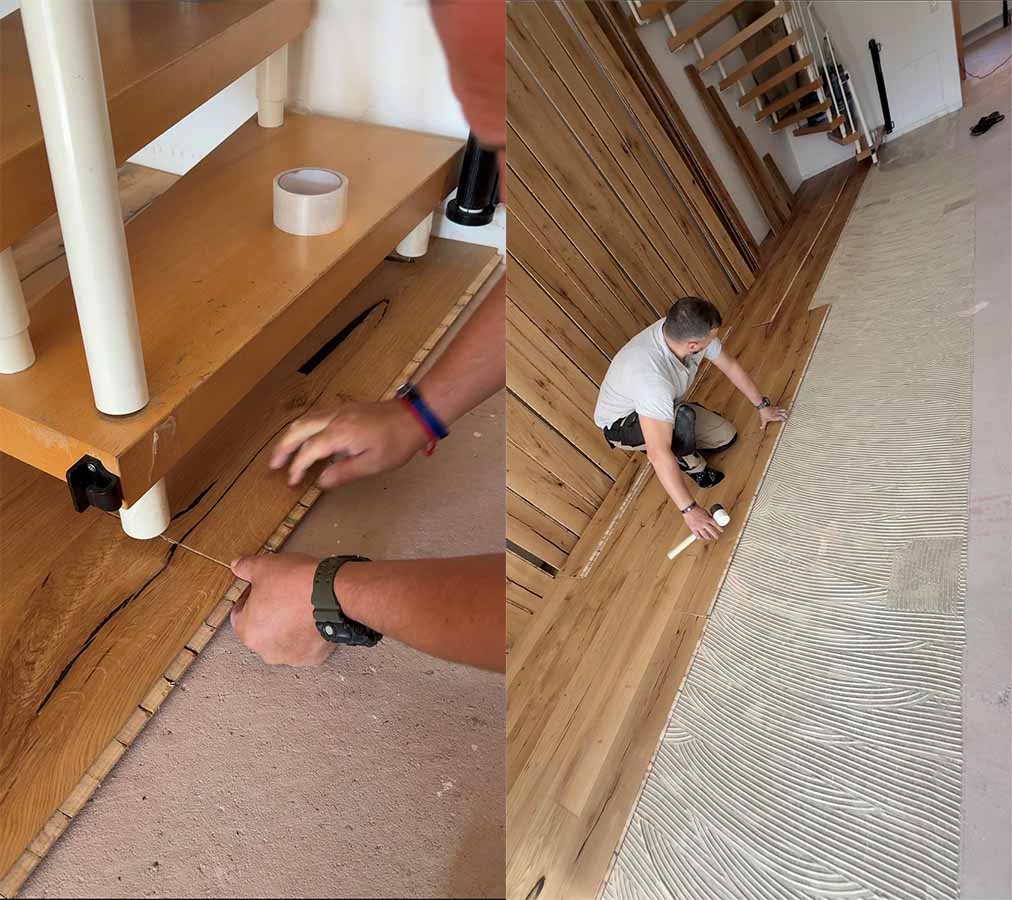
Professional installation not only looks better - it also protects your budget from costly future repairs.
Quality & Durability Benefits
Experienced installers pay attention to often-overlooked details:
- Proper acclimatization of the parquet
- Subfloor moisture testing
- Correct expansion joints
- Suitable adhesives and primers
- Clean detailing around doors, pipes, and skirting boards
Experience truly shows in the details. A skilled parquet installer works with greater precision, ensuring:
- Seamless installation across rooms where technically feasible
- Clean edges and refined finishes
- Precise cuts around frames, corners, and transitions
- A harmonious overall appearance without visual disruption
The result: fewer gaps, reduced noise, no waves, no complaint - and a floor that brings enjoyment for many years, often decades.
Indoor Climate & Impact Sound
Thanks to its natural material properties, parquet enhances indoor comfort. When installed correctly, impact sound is noticeably reduced, depending on structure, underlay, and adhesive.
A high-quality parquet floor reveals its true value only when subfloor, installation method, and details work together professionally.
Consultation & Quotation
Would you like to know which parquet type and installation method best suit your project? We would be happy to advise you personally - optionally with sample comparisons in our showroom. Simply send us your floor plan or a few photos of the subfloor, and you will receive a transparent assessment and a tailored quote. Alternatively, you can book a consultation and sampling appointment directly.