Interior Doors 2026: Minimalism Meets Authentic Quality
Februar 20, 2026
Trends, Construction, Surfaces, and Hardware – How to Identify Premium Doors
In 2026, interior design is becoming clearer, calmer, and more architectural. Walls are conceived as continuous surfaces, lines are kept clean, and materials must feel "real." This shift puts interior doors in the spotlight: they define the wall's appearance, the sense of space, acoustics, and the perceived value of the entire interior.
This guide outlines the most important interior door trends for 2026 and provides a clear breakdown of quality levels—from core construction to finishes and handles.
Key Trends for 2026 at a Glance
- Flush-closing (rebate-free) doors are becoming the modern standard (clean look, precise lines).
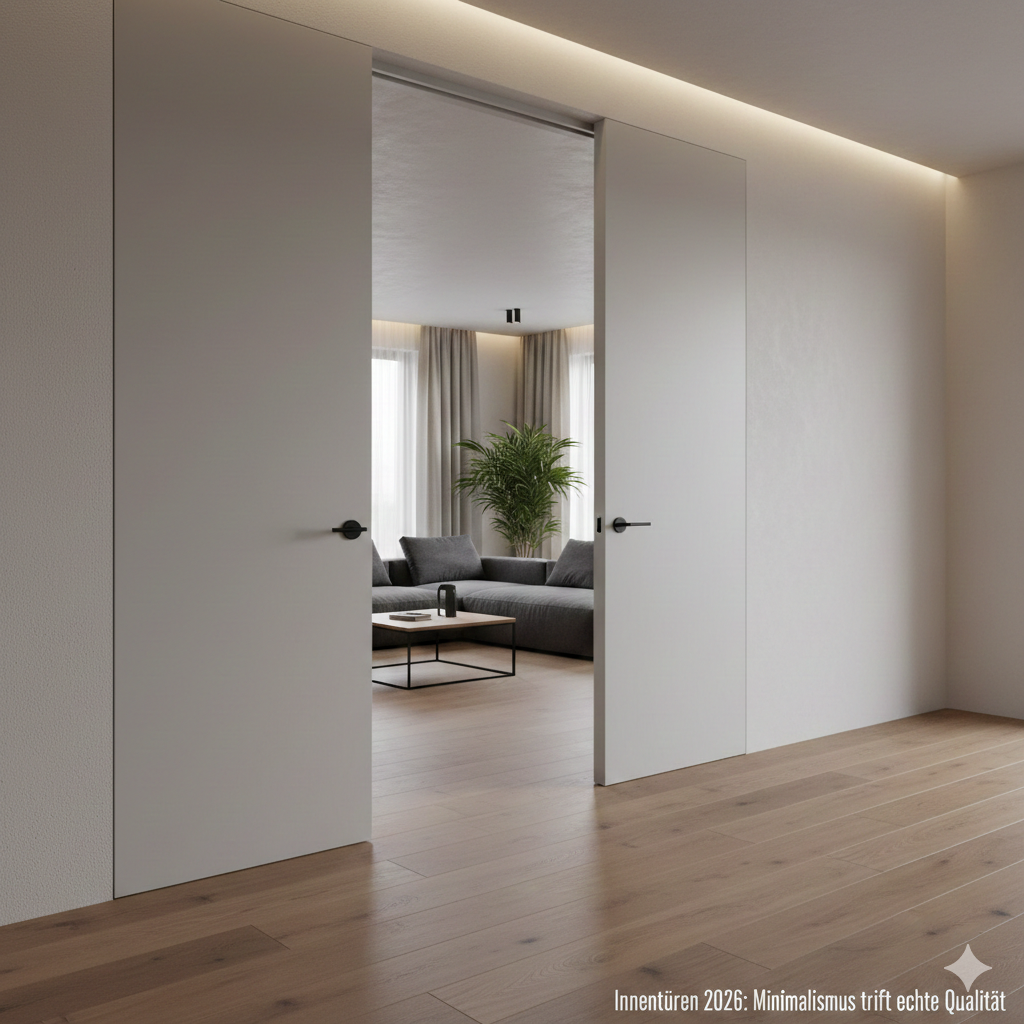
- Wall-flush doors represent uncompromising minimalism (the door becomes part of the wall).
- Matte lacquers & real wood veneers dominate as premium surfaces.
- Soundproofing, magnetic locks, and concealed hinges are in high demand.
- Handle sets as a style tool: From classic to futuristic, hardware defines the character.
1. Trend: Flush-Closing (Rebate-Free)
Quiet, Modern, High-End
Flush-closing doors are a staple of modern 2026 interiors. The door leaf sits perfectly level within the frame, creating a much calmer joint pattern than traditional overlapped (rebated) doors.
Why they are trending: Fewer visible steps/edges and clean lines that match modern wall surfaces.
Standard Features: Magnetic locks for a clean closing edge and optional concealed hinges for maximum reduction.
2. Trend: Wall-Flush Doors
The Epitome of Minimalism
Wall-flush doors are the ultimate architectural statement. By sitting perfectly flush with the wall surface, they allow walls to appear larger and more "clutter-free."
- The Look: The door integrates into the wall or can be used as a deliberate accent.
- The Catch: These require early planning regarding wall construction, plastering, and precise measurements. Minimalism is unforgiving of poor execution.
3. Quality Check: The Inner Core
The difference between doors often lies where you can't see it—until you hear it or feel it.
- Honeycomb (Paper): Very light, "hollow" sound, low stability.
- Tubular Chipboard: Robust, better sound insulation than honeycomb.
- Solid Chipboard: Heavy, stable, "solid" closing feel.
- Specialized Cores: Designed for acoustic or fire protection.
Pro Tip: A solid wood internal frame is a hallmark of quality. It ensures hardware stays secure, prevents warping, and provides a "saturated" acoustic thud when closing.

4. The Frame: An Underrated Factor
While many focus on the door leaf, the frame (jamb) determines long-term stability.
- Standard: Wood-based composites (MDF/Pressboard). Good for general use but sensitive to impact.
- Premium: Solid wood frames. These are structurally superior, hold hinges better, and maintain precision—essential for flush-closing systems.
5. Surfaces: Lacquer and Real Wood Veneer
In 2026, the surface is the ultimate style marker.
- CPL / Laminate: Practical and robust, but the "printed" texture can look artificial and is hard to repair.
- Lacquer (Matte): The premium choice for a homogeneous, architectural look. Allows for "tone-on-tone" matching with walls.
- Real Wood Veneer: Adds warmth and authenticity. Every door is unique, making minimalism feel cozy rather than cold.

6. Hardware & Tech: The Details Matter
- Magnetic Locks: No protruding latch; quieter and cleaner look.
- Concealed Hinges: Invisible when the door is closed.
- Enhanced Acoustics: Increasing demand due to home offices and open-floor plans.
7. Handles: The Style Lever
The handle can completely change the "vibe" of a minimalist door:
- Classic-Modern: Subtle rosettes, timeless shapes.
- Purist: Flat rosettes, geometric lines, often in matte black or titanium.
- Futuristic: Sharp angles, statement designs for bold architectural concepts.
Common Mistakes to Avoid
- Late Planning: Wall-flush doors must be planned before the drywall or plastering phase.
- Ignoring Floor Height: You must know the exact height of the screed + final floor covering.
- Poor Installation: Minimalist doors show every millimeter of error. Precision leveling is mandatory.
FAQ
- Flush-closing vs. Wall-flush? Flush-closing means the door is level with its frame. Wall-flush means the door (and frame) is level with the wall.
- Is Lacquer better than CPL? Architecturally, yes. It offers a more seamless, high-end finish, whereas CPL is a durable, budget-friendly "print."
- How do I spot quality? Listen to the sound of it closing, check the consistency of the gaps (margins), and feel the weight.
Final Verdict for 2026: The trend is moving toward "quiet" luxury. High-quality construction, solid frames, and authentic surfaces like matte lacquer or wood are replacing cheap laminates.