Straight Wooden Staircases: Timeless Design for Modern Interiors
März 04, 2026
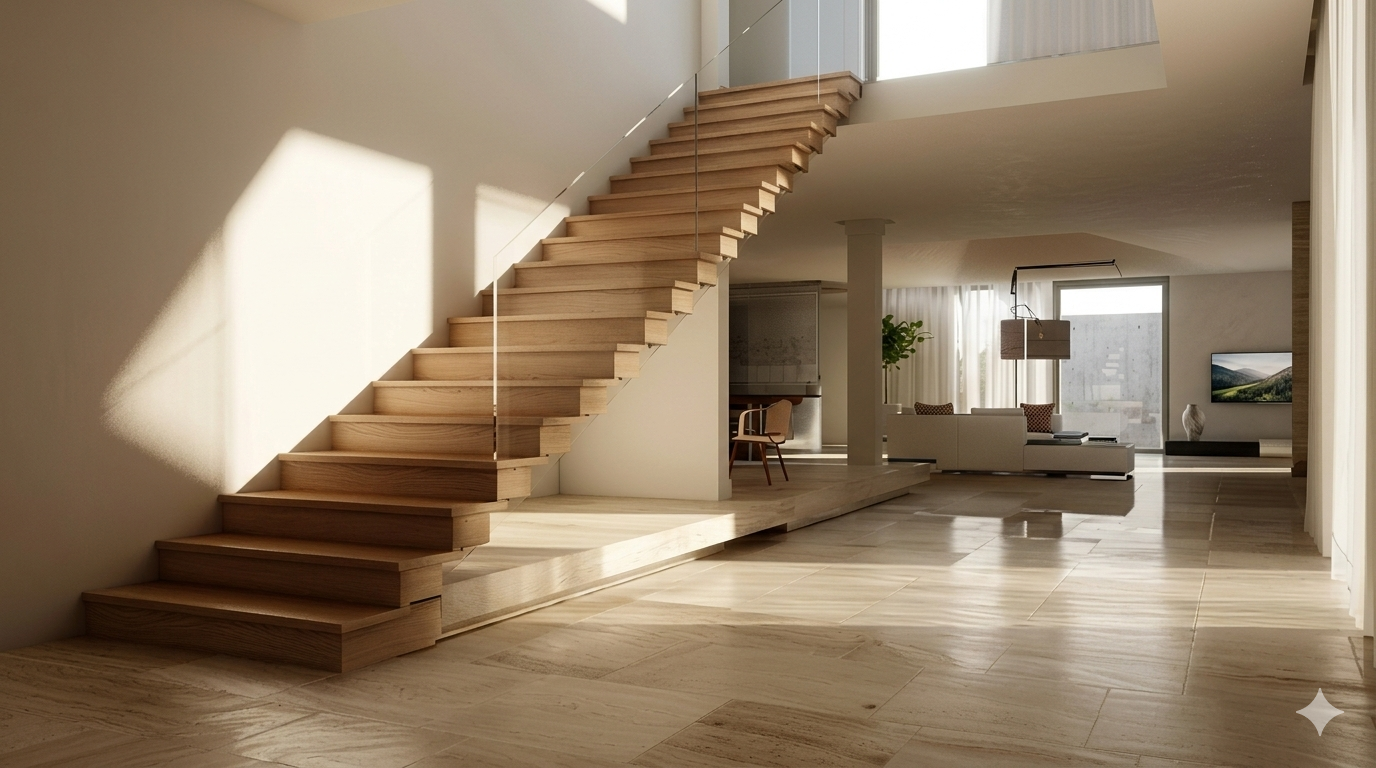
Straight wooden staircases are among the most timeless and popular staircase designs in interior architecture. They connect floors in a direct, efficient way, offer clean lines, and integrate seamlessly into a wide range of interior styles—from classic country homes to modern city apartments. But what design options are available when planning a straight wooden staircase?
Why Choose a Straight Wooden Staircase?
Straight staircases are widely used for good reason. Structurally, they are simpler than curved or spiral designs. At the same time, they provide comfortable and intuitive use—especially beneficial for children and older adults, as the uniform and straightforward layout enhances safety and convenience.
Wood as a material adds warmth, natural beauty, and a pleasant tactile quality to living spaces—qualities that no other material can fully replicate.
Wood Species and Their Visual Impact
The choice of wood significantly influences not only the appearance but also the durability and maintenance requirements of your staircase.
Oak is the classic choice for staircases. It is hard, highly durable, and features a distinctive grain that becomes even more attractive over time. Oak staircases work equally well in rustic and modern interiors.
Beech has a finer, more uniform grain and a lighter tone. It is ideal for interiors that emphasize brightness and visual lightness.
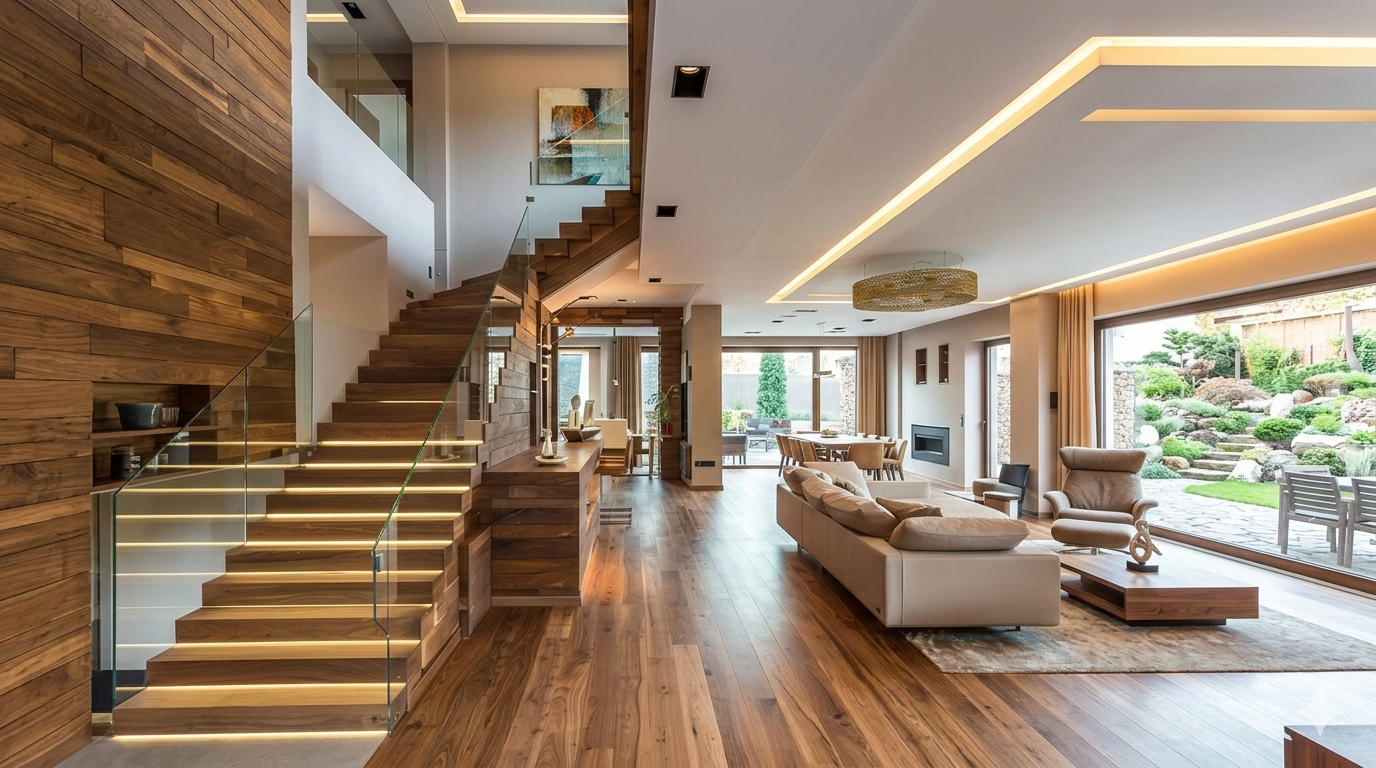
Walnut stands out with its warm, dark brown tones and gives a staircase an elegant, prestigious character—perfect for upscale living spaces.
Pine and spruce are more affordable alternatives that bring a charming, country-style aesthetic. However, they are softer woods and more prone to scratches and dents.
Bamboo, while technically a grass rather than wood, is increasingly used as a sustainable and extremely hard staircase material.
Style Directions for Straight Wooden Staircases
Classic and Traditional
The classic style features curved solid-wood handrails, turned balusters, and warm wood tones. Brown or honey-colored oak combined with a turned railing made of the same material creates a timeless, elegant look that harmonizes beautifully with traditionally furnished homes.
Modern and Minimalist
Those who prefer clean lines and understated design often combine a straight wooden staircase with steel or glass railings. The treads remain visible, frequently stained in gray or dark brown, and are designed with minimal decorative elements. Open riser stairs—without vertical risers—enhance the floating, lightweight effect and allow more light to flow through the space.
Scandinavian and Natural
The Scandinavian style emphasizes light woods such as beech or lightly oiled oak, white walls, and slim, geometric railings. The staircase becomes part of a natural, uncluttered living concept that conveys calmness and clarity.
Industrial and Urban
For a loft-inspired look, raw or dark-stained wood pairs well with metal elements. Black steel stringers, solid wooden treads, and simple brushed steel pipe railings create a striking contrast between organic materials and industrial features.
Structural Design Elements
Open vs. Closed Staircases
An open staircase without risers appears airy and modern, allows light to pass through, and is especially suitable for smaller or darker rooms.
A closed staircase with risers offers greater safety, improved sound insulation, and can create usable storage space underneath.
Wall-Integrated Staircases
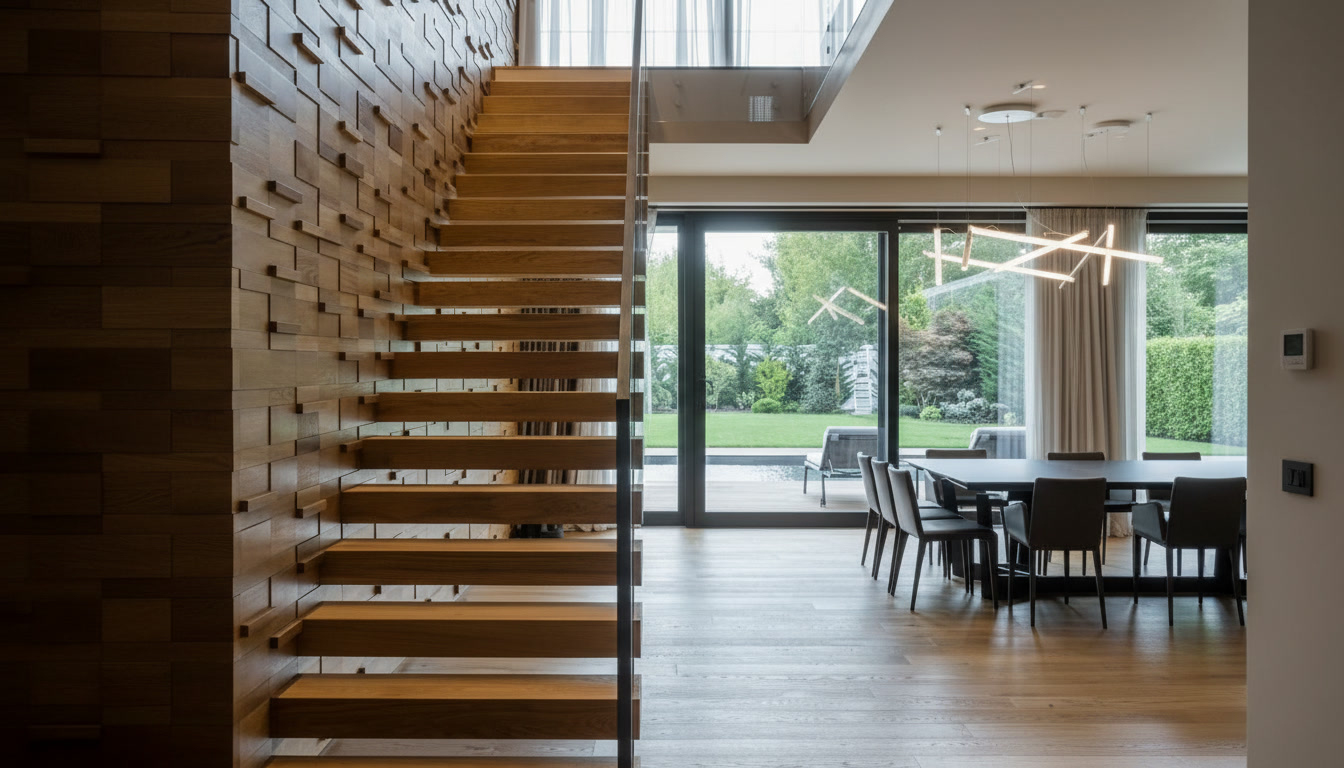
In wall-integrated designs, the treads are anchored directly into the wall and appear to float freely in space. This option requires a solid structural wall but delivers a particularly spectacular and space-saving effect.
Staircases with Storage
The area beneath a straight staircase is often underutilized. With thoughtful planning, it can be transformed into cabinets, shelving, a reading nook, or even a compact home office. Wooden staircases are especially suitable for such solutions because the material is easy to customize and adapt.
Stringer and Central Beam Staircases
In a stringer staircase, the treads are supported by two side stringers— a classic and highly stable construction method.
A central beam staircase, on the other hand, is supported by a single central beam, allowing the treads to project outward. This creates an elegant, almost sculptural appearance.
Surface Treatment and Color
Surface treatment plays a crucial role in determining the staircase’s appearance, durability, and maintenance requirements.
- Oiling is the most natural method. The wood remains breathable, the grain is beautifully highlighted, and local repairs are relatively easy. However, oiled surfaces require regular maintenance.
- Lacquering provides a strong, protective film that is highly resistant to wear, though scratches can be more difficult to repair. High-gloss finishes create a refined, modern look, while matte finishes appear more subtle and natural.
- Staining changes the wood color without concealing the grain. Light pine can be stained in a deep walnut tone, or dark oak can be lightened—depending on the desired overall design concept.
White or colored paint is also an option, particularly popular for risers and railings in Scandinavian-inspired interiors.
Safety and Building Regulations
Despite the many design possibilities, safety should always come first. In Germany, DIN 18065 regulates minimum requirements for residential staircases, including step height, tread depth, railing height, and baluster spacing.
For families with children, tighter baluster spacing is recommended to prevent climbing through. Slip-resistant surfaces or applied anti-slip strips significantly improve safety, especially on heavily used staircases.
Conclusion
A straight wooden staircase is far more than a functional connection between floors—it is a design statement that significantly shapes the character of your home. Whether rustic and warm, modern and minimalist, or industrial and urban, the possibilities are nearly endless.
With the right choice of wood, an appropriate style, and a carefully selected surface treatment, your staircase can become the true centerpiece of your interior.